EN
EN


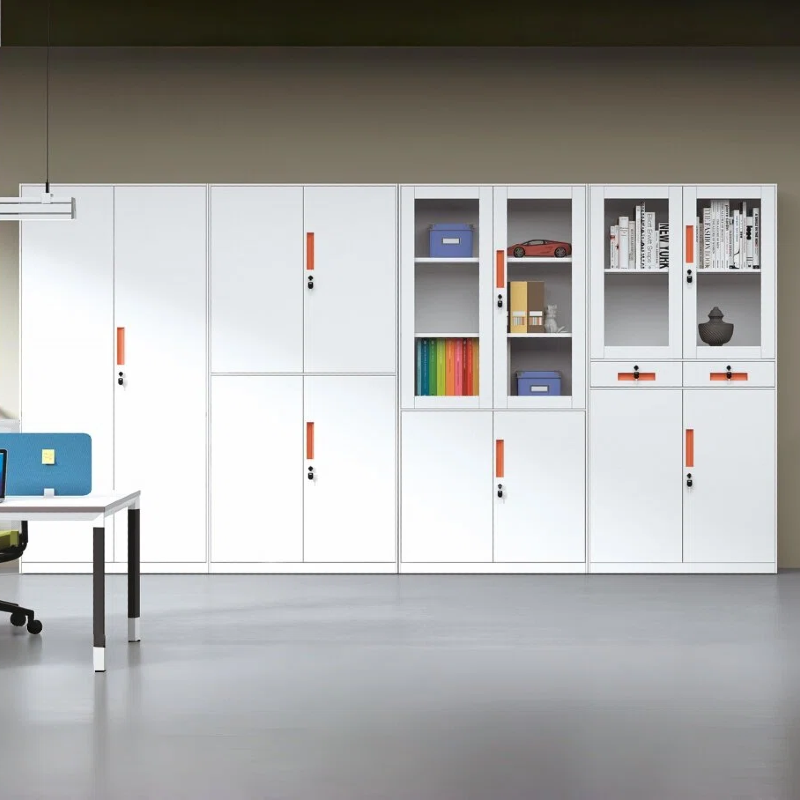
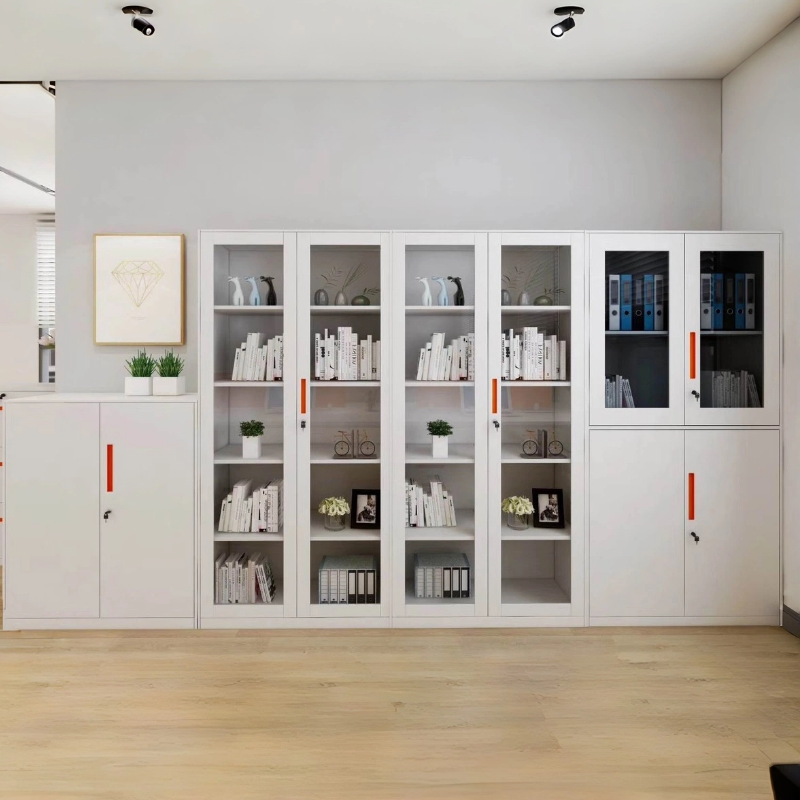
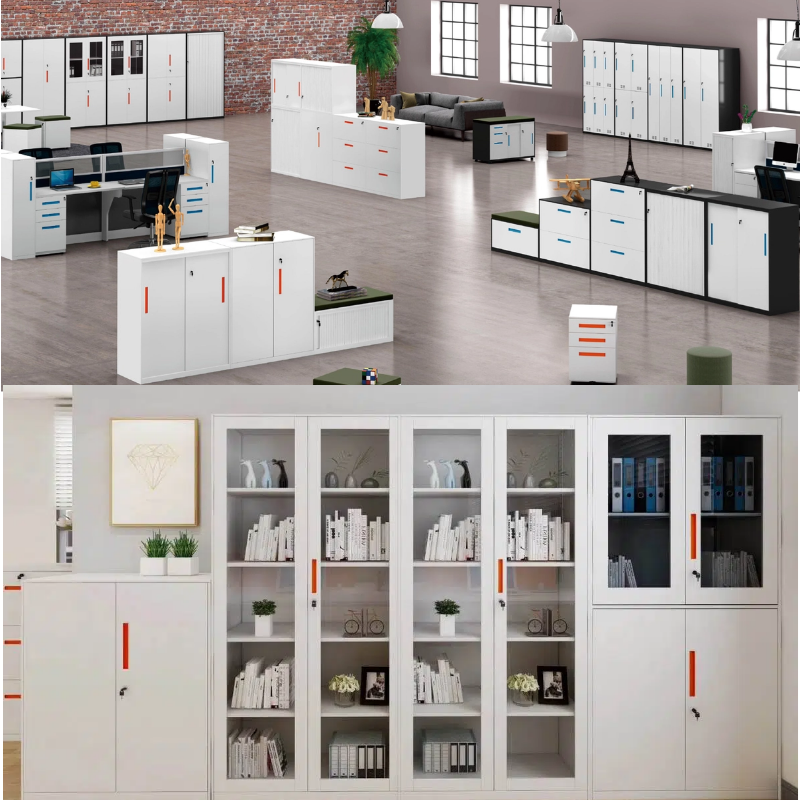
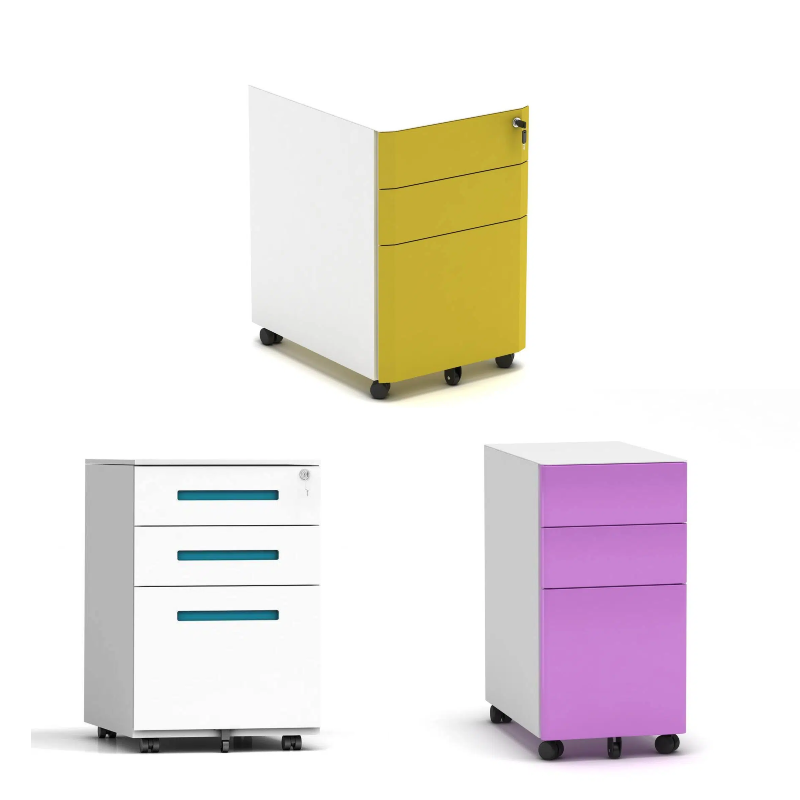
Steel Drawers Reliable Office Filing Organization Storage Cabinet
Place of Origin: Guangdong,China
Brand Name: Cleader
Glass: Thickened explosion-proof
Material: 0.6 ratio with 0.5mm cold-rolled steel plate
Size: 900*400*750mm/900*400*1050mm/900*400*1850mm/900*400*390mm
Feature: Large Capacity
Specific use: Filing Cabinet
General use: Commercial Furniture
- Description
- Specifications
- Applications
- Advantages
- FAQ
- Recommended Products
Description
In the domain of institutional operations where systematic information preservation intersects with spatial economy, this steel filing cabinet establishes itself as a structural component in workplace efficiency architecture. This precision-manufactured storage system represents the synthesis of industrial engineering, organizational psychology, and spatial mathematics, offering a three-dimensional framework that transforms document management from passive storage into active information infrastructure. Forged through advanced manufacturing processes, this cabinet redefines conventional filing by creating a dynamic repository that understands how physical storage geometry influences retrieval patterns, workflow continuity, and institutional memory preservation in contemporary professional ecosystems.
Material Science Application
The cabinet's structural composition employs strategically layered 0.6mm and 0.5mm cold-rolled steel panels that create a material matrix balancing tensile strength with gravitational resistance. This calibrated thickness differential implements engineering principles where load-bearing vectors receive reinforced material allocation while non-critical planes maintain optimal weight efficiency. The cold-rolled manufacturing process induces molecular realignment that enhances material resilience against torsion and compressive forces, resulting in a monocoque construction where every panel contributes to overall structural integrity. The steel undergoes electrochemical treatment that creates microscopic surface patterning, increasing paint adhesion while forming corrosion-resistant crystalline structures. This metallurgical approach produces storage architecture that maintains dimensional fidelity through decades of document loading cycles and operational stress.
Configurational Intelligence
At the core of the cabinet's design philosophy lies its geometrically variable interior plane system that enables topological adaptation to evolving documentation landscapes. The adjustable shelf mechanism employs parallelogrammatic support structures that maintain perpendicular alignment through full adjustment range while distributing vertical loads across multiple contact points. This engineering allows binary configuration states: high-density archival arrangements maximizing cubic storage efficiency, and access-optimized layouts facilitating rapid document retrieval. The system accommodates heterogeneous document formats through modular dividers that create cellular compartments without permanent partitioning, recognizing that organizational knowledge exists in fluid states requiring physical storage systems with morphological capabilities.
Optical Security Interface
The cabinet incorporates structurally enhanced transparency panels that create visual access while maintaining physical barrier integrity. These specialized glass elements undergo ion-exchange strengthening that creates compressive surface layers resisting microfracture propagation, achieving impact resistance magnitudes exceeding conventional glazing solutions. The optical clarity provides immediate content legibility through spectral filtering that reduces glare while maintaining true color transmission, allowing visual inventory management without physical interaction. This transparent barrier serves dual functions: as psychological deterrent through visible security presence, and as operational efficiency tool through instant content recognition. The glass interface transforms the cabinet from opaque container into information display system where document status becomes visually verifiable.
Volumetric Optimization
The cabinet implements spatial efficiency algorithms through its maximized interior volume-to-footprint ratio. The design employs Fibonacci sequence proportions in drawer compartmentalization, creating golden ratio relationships between width, depth, and height that optimize both storage capacity and ergonomic accessibility. Air displacement calculations inform void space allocation, ensuring adequate ventilation while minimizing dead volume. The drawer extension system utilizes cantilever mechanics that provide full front-to-rear access while maintaining center of gravity within stability parameters. This volumetric intelligence acknowledges that effective storage represents mathematical optimization where physical space constraints must harmonize with information density requirements in institutional settings.
Operational Kinematics
The cabinet's functional performance derives from precision mechanical systems engineered for sustained operational cadence. Drawer movement employs helical bearing arrays that convert linear motion into rotational energy, reducing friction coefficients by approximately 67% compared to conventional slide mechanisms. The suspension system incorporates harmonic dampeners that absorb kinetic energy during opening/closing cycles, preventing resonant vibration transmission to adjacent structures. The locking mechanism implements sequential engagement technology where multiple security points activate through single control input, creating graduated access protocols appropriate for hierarchical document classification systems. These mechanical refinements transform document retrieval from mechanical task into seamless interaction where physical effort disappears behind engineered efficiency.
Environmental Integration
The cabinet demonstrates contextual adaptability through its architectural presence in diverse professional environments. Its geometric purity references Bauhaus design principles while incorporating contemporary manufacturing aesthetics, creating visual neutrality that complements rather than competes with interior design schemes. The steel substrate accepts multiple finishing protocols—from electrostatic powder coatings to catalyzed polymer applications—allowing surface customization that integrates with corporate identity systems. The modular framework supports both autonomous implementation and aggregated storage walls, enabling scalable documentation infrastructure that grows with organizational needs. This environmental consciousness recognizes that storage systems function as architectural elements within workplace ecosystems, requiring design coherence with surrounding spatial narratives.
Manufacturing Methodology
Each cabinet originates from production facilities implementing digital twin manufacturing protocols where virtual modeling precedes physical fabrication. Computer-numerical-controlled plasma cutting achieves micron-level precision in panel profiling, while robotic welding creates continuous fusion joints with metallurgical consistency exceeding manual techniques. The finishing process employs cathodic electrocoating that creates molecular bonds between pigment and substrate, resulting in surface hardness comparable to industrial tool coatings. Quality validation utilizes laser interferometry for dimensional verification and acoustic resonance testing for structural integrity assessment, ensuring each unit performs identically within specified parameters despite production scale.
Sustainable Institutional Design
Embedded within the cabinet's lifecycle is circular economy engineering that prioritizes material perpetuity over product obsolescence. The steel composition incorporates recycled content exceeding 40% while maintaining performance specifications, with end-of-life recovery rates projected at 98%. Manufacturing energy derives from renewable sources, with production waste streams feeding adjacent material reclamation processes. The design facilitates component-level replacement rather than complete unit retirement, extending service life through decades of continuous use. This sustainability framework aligns with institutional responsibility paradigms where physical assets must demonstrate environmental stewardship throughout their operational existence.
Cognitive Workspace Enhancement
Ultimately, this steel filing cabinet represents applied organizational psychology where physical systems influence cognitive patterns in professional environments. By creating predictable, reliable document access pathways, it reduces cognitive load associated with information retrieval, freeing mental resources for analytical tasks. The visual order imposed by the storage system creates psychological stability that enhances focus and reduces decision fatigue. The security features provide psychological safety for sensitive information, while the adaptable configuration supports evolving knowledge management strategies. For institutions navigating information-intensive operational landscapes, this cabinet offers not merely storage but cognitive architecture—physical systems that actively shape how knowledge is organized, accessed, and utilized in pursuit of institutional objectives. It transforms document management from administrative necessity into strategic advantage through engineered systems that understand how physical order creates mental clarity in complex professional environments.
Specifications
| Place of Origin | Guangdong,China |
| Brand Name | Cleader |
| Glass | Thickened explosion-proof |
| Material | 0.6 ratio with 0.5mm cold-rolled steel plate |
| Size | 900*400*750mm/900*400*1050mm/900*400*1850mm/900*400*390mm |
| Feature | Large Capacity |
| Specific use | Filing Cabinet |
| General use | Commercial Furniture |
Applications
Medical Institution Records Center: Hospital records management departments deploy twenty specialized filing cabinets. Medical staff quickly locate patient historical records through transparent glass doors, with adjustable interior shelves accommodating different medical file folder specifications. Cabinets maintain smooth operation despite undergoing over eighty opening/closing cycles daily.
Educational Administration Office: University administrative buildings utilize six standard filing cabinets for student records management. During admission seasons, staff handle hundreds of record retrievals daily, with adjustable internal structures flexibly accommodating dimensional variations across different academic years. The steel construction operates quietly under frequent use.
Advantages
With its engineered material composition utilizing differentiated cold-rolled steel thicknesses, this filing cabinet delivers superior durability and space optimization. The adjustable shelving system adapts to evolving storage needs, while safety glass panels provide secure visibility. Its all-steel construction maximizes storage volume within compact dimensions, offering organizations a reliable, adaptable document management solution for professional environments.
FAQ
Q1: What materials are used in it? Are they environmentally friendly?
A: All use high-quality materials that have received environmental certification.
Q2: Do you provide product samples? What about the cost?
A:Material samples can be provided. The shipping cost for the samples is at your own expense. For more requirements, please contact us.
Q3: What is the lead time for standard and customized orders?
A: Standard models ship within 25-35 business days.For more requirements, please contact us.
Q4: Can I customize sizes, colors, or finishes?
A: Support customization. For more requirements, please contact us..
Q5: Is an installation manual or tools provided?
A: We provide installation videos.
Q6: Do you provide bulk order discounts for corporate projects?
A: We can offer tiered discounted prices. For more details, please contact us.
Q7: What is the payment method?
A: We accept T/T. For more requirements, please contact us.