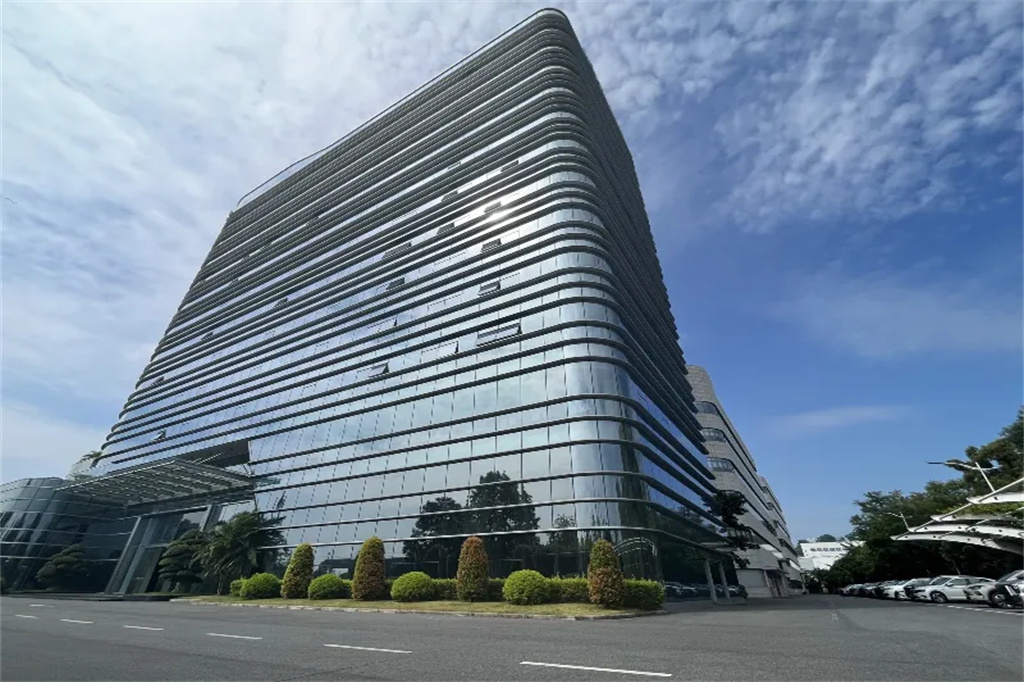
Introduction: The Evolving Landscape of Modern Workspaces
Contemporary office environments are undergoing a profound transformation, moving beyond the binary choice between open-plan layouts and traditional private offices toward a more nuanced, human-centric approach. The modern workplace is increasingly recognized as a dynamic ecosystem that must simultaneously foster collaboration, support focused work, and enhance overall well-being. This comprehensive exploration delves into the sophisticated balance between openness and privacy, examining how innovative design solutions—particularly the strategic integration of private office pods—create environments where both individual productivity and team synergy can thrive.
The fundamental challenge facing today's organizations is creating spaces that accommodate diverse work modalities without forcing employees to choose between collaboration and concentration. Research consistently demonstrates that neither purely open nor entirely private environments optimize performance across different tasks and personality types. The most effective workplaces are those that provide what psychologists term "permissioned privacy"—the ability to control one's level of interaction and environmental stimulation based on immediate needs. Our design philosophy embraces this complexity, creating layered environments that offer both community and sanctuary within the same spatial framework.
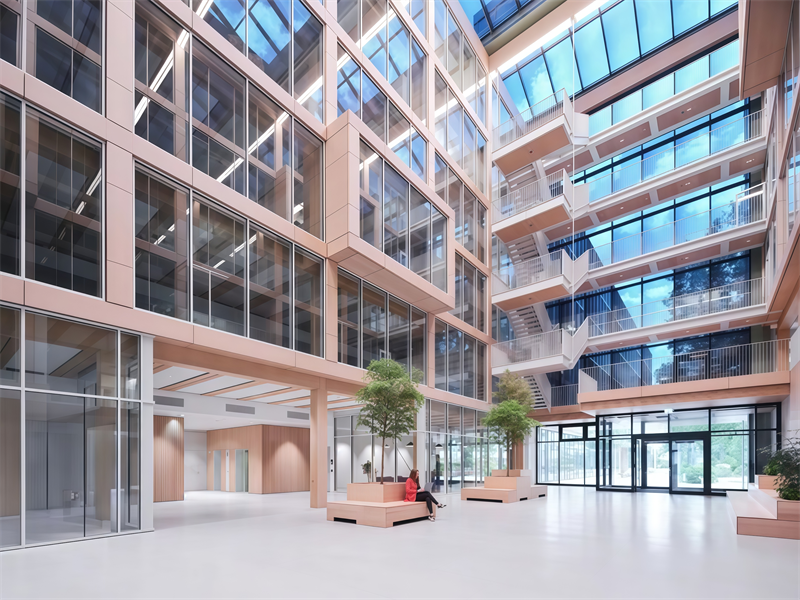
The traditional dichotomy between open and private workspaces has given way to a more sophisticated understanding of workplace design as a spectrum of spatial experiences. Open-plan offices, while excellent for fostering communication and reinforcing organizational culture, often fail to support the approximately 54% of work tasks that require uninterrupted focus. Conversely, completely enclosed traditional offices can isolate team members, impede spontaneous collaboration, and create hierarchical physical barriers that contradict modern egalitarian workplace values.
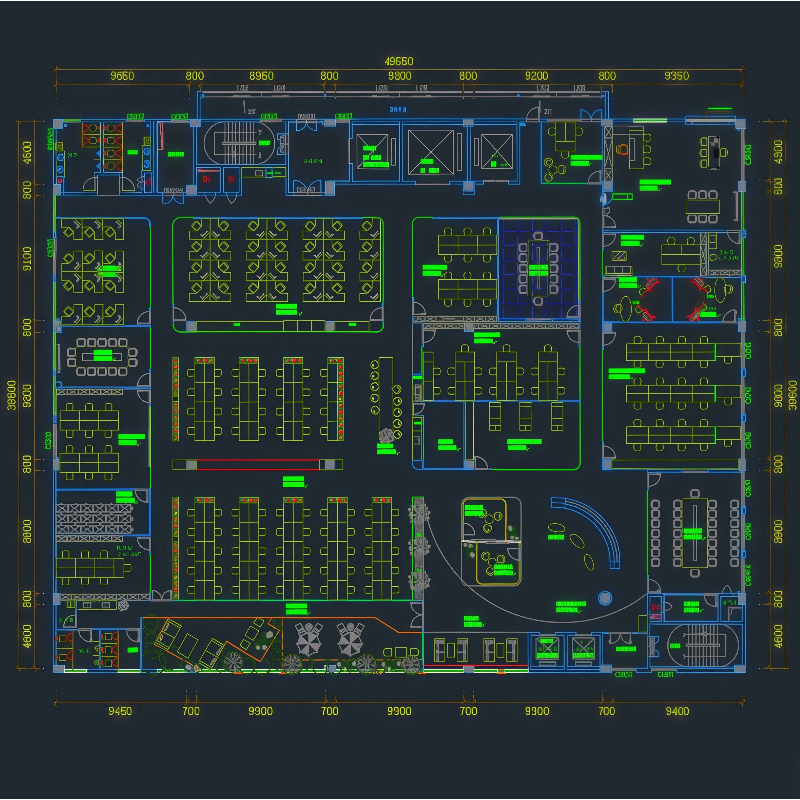
Our design methodology addresses this challenge through what we term "contextual zoning"—creating distinct but interconnected areas tailored to specific activities and cognitive states. Rather than a uniform open plan, we design neighborhoods with varying densities and acoustic characteristics. The strategic placement of visual dividers—from greenery walls to art installations—creates subtle psychological boundaries without physical barriers. Circulation paths are carefully choreographed to encourage chance encounters between departments while providing clear, low-distraction routes to focus areas.
Within this thoughtfully zoned environment, we implement "acoustic layering" using sound-absorbing materials in ceilings, walls, and floors, complemented by ambient sound systems that provide subtle audio privacy. Furniture arrangements create micro-environments with differing levels of exposure and enclosure, allowing employees to self-select based on their current task and social energy. This approach recognizes that privacy needs fluctuate throughout the day and differ among individuals, requiring a responsive environment rather than a fixed solution.
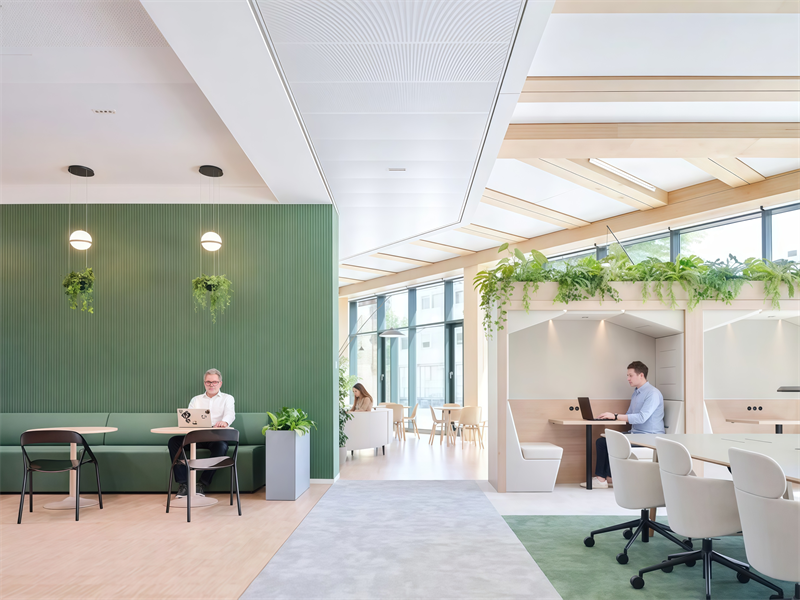
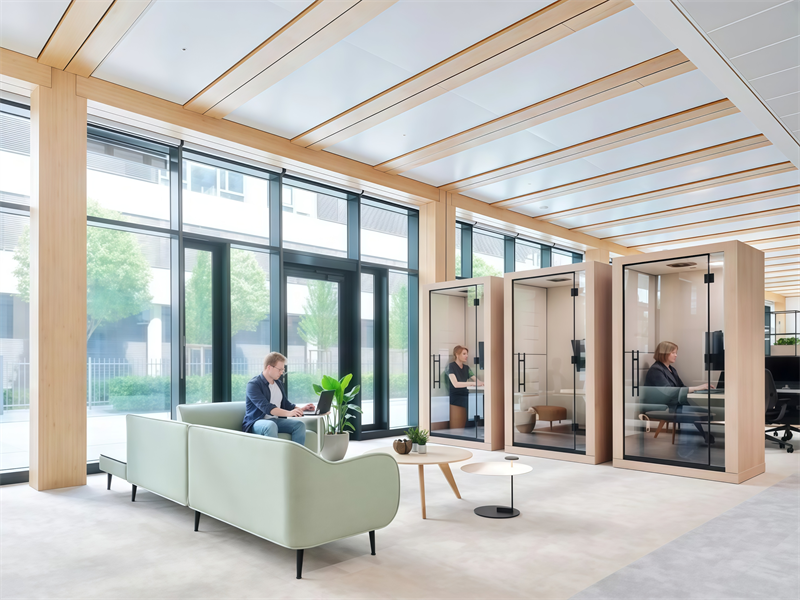
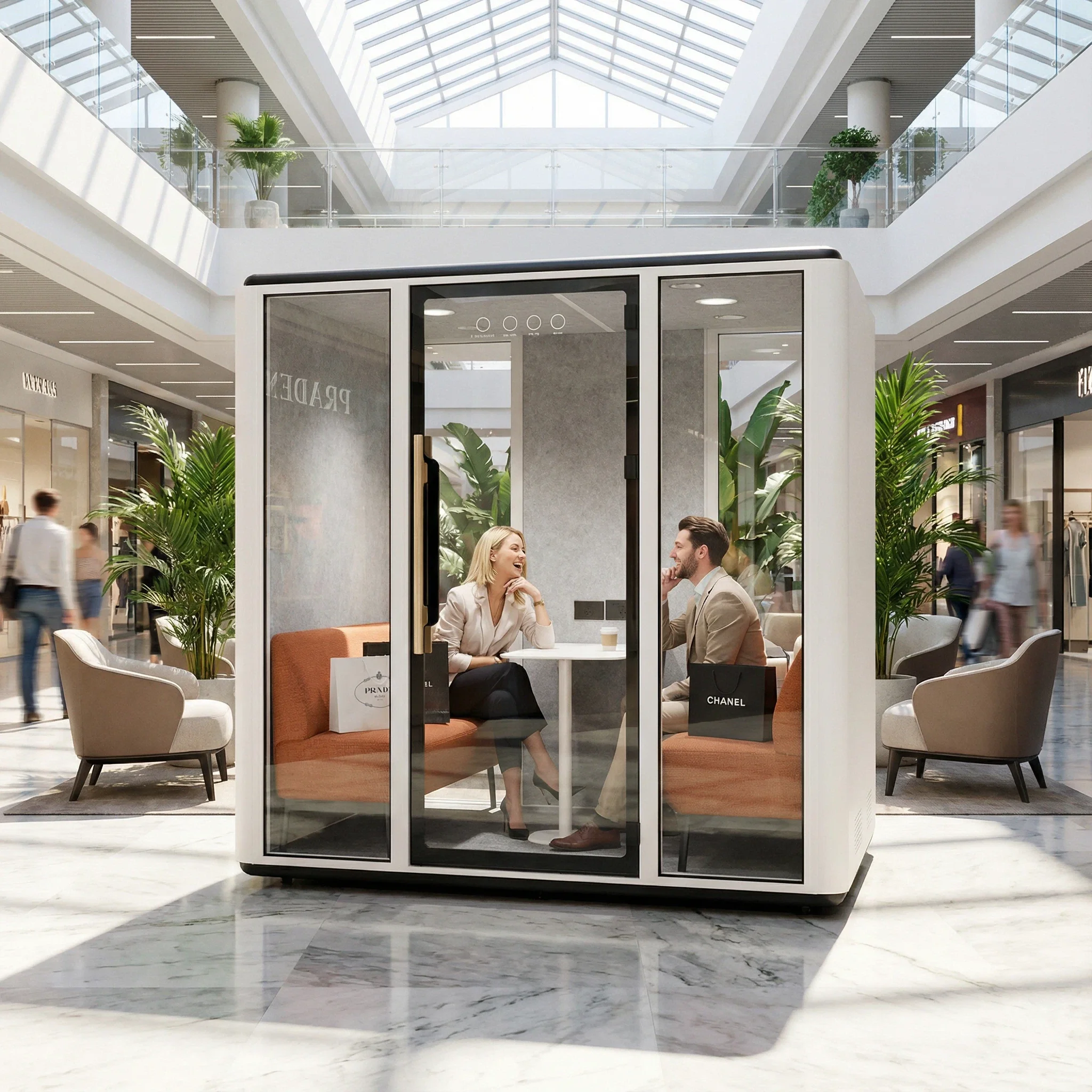
Private office pods represent a revolutionary development in workplace design, offering an elegant solution to the limitations of both open plans and traditional offices. These sophisticated, self-contained environments have evolved far beyond basic phone booths into multifunctional spaces supporting a wide range of activities requiring varying degrees of privacy and technological support.
Our private pods are designed as a system with multiple typologies:
• Focus Pods: Soundproofed enclosures for individual deep work, equipped with ergonomic seating, task lighting, and integrated power/data connectivity
• Collaboration Pods: Slightly larger units accommodating 2-4 people for private discussions or small team meetings
• Telepresence Pods: Technologically enhanced spaces with professional-grade audio/video systems for high-quality remote collaboration
• Recovery Pods: Designed for mental restoration, featuring comfortable seating, biophilic elements, and controlled lighting for short breaks
The architectural design of these pods balances enclosure and connection through strategic use of materials. Frosted glass sections maintain visual privacy while allowing light transmission; perforated metal panels provide acoustic isolation without creating oppressive solid barriers; integrated greenery creates natural visual separation. Each pod incorporates sophisticated ventilation systems ensuring air changes exceed standard office requirements, preventing the stuffiness often associated with enclosed spaces.
Technological integration transforms these pods into smart workspaces. Occupancy sensors optimize energy use and provide data on space utilization; touchless entry systems enhance hygiene and convenience; integrated environmental controls allow users to customize lighting and temperature. Perhaps most importantly, these pods are designed for flexibility—modular construction allows reconfiguration as needs evolve, and mobile units can be repositioned to respond to changing team structures or work patterns.
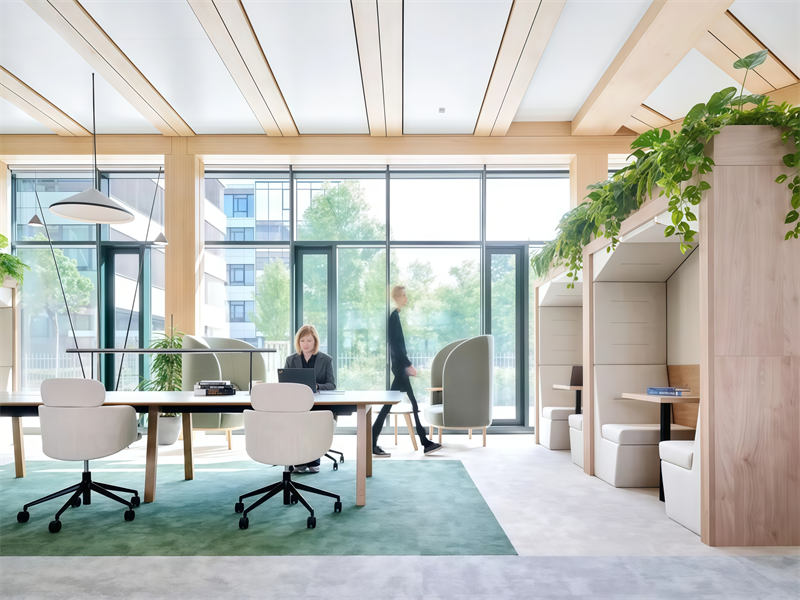
Our approach to biophilic design extends far beyond superficial decoration to create environments that actively support cognitive function, emotional well-being, and physical health. We implement a layered strategy that integrates natural elements at multiple scales, from building-wide systems to individual workstations.
Natural Light Optimization: We begin with comprehensive daylight analysis, using advanced modeling tools to predict light penetration throughout the year. Workspace layouts are then organized along daylight gradients, placing collaboration areas in brighter zones and focus areas in more moderated light conditions. Light-reflecting surfaces and strategically placed interior glazing distribute daylight deeper into floorplates. Where natural light is limited, we install circadian lighting systems that mimic the spectral qualities and intensity variations of daylight, supporting natural sleep-wake cycles and maintaining energy levels throughout the day.
Living Systems Integration: Our planting strategy serves multiple functions simultaneously. Vertical gardens act as natural air filtration systems while providing visual privacy between work areas. Desk-level planting creates personal connections to nature and opportunities for micro-restoration during short breaks. Atria and common areas feature more ambitious installations—indoor trees, water features, and habitat walls—that transform the office into a living ecosystem. We select plant species based on their air-purifying capabilities, maintenance requirements, and sensory qualities, creating varied textures, scents, and seasonal changes.
Material Authenticity: Beyond plants and light, we extend biophilic principles to material selection, favoring natural materials with visible grain, variation, and tactility. Wood surfaces provide visual warmth and acoustic benefits; stone elements connect occupants to geological processes; natural fiber textiles add softness and texture. These materials are arranged in patterns that echo natural systems—fractal geometries in partitions, organic forms in furniture, gradations in color that reference landscapes.
The psychological impact of this comprehensive biophilic approach is profound. Studies document 6-15% improvements in creativity, 15% increases in well-being, and significant reductions in absenteeism in biophilically designed offices. More subjectively, employees report greater job satisfaction, stronger emotional connections to workplace, and enhanced sense of belonging—factors crucial for retention in competitive talent markets.
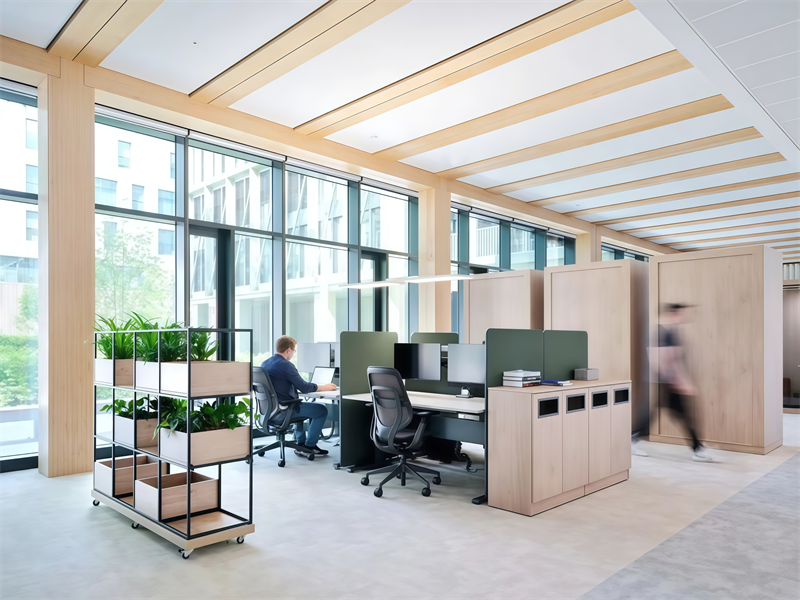
Our one-stop service model transforms innovative concepts into tangible environments through a meticulously managed process that combines strategic insight with flawless execution. This holistic approach ensures that design intentions are preserved and enhanced through every phase of development.
Integrated Project Management Ecosystem: Our management methodology breaks down traditional silos between design, engineering, and construction teams. From project inception, all disciplines collaborate in shared digital environments using Building Information Modeling (BIM) platforms that allow real-time coordination and conflict detection. This integrated approach identifies potential issues months before they would emerge in traditional processes, reducing change orders by approximately 40% and accelerating project timelines by 25-30%.
Our project management extends beyond physical delivery to include change management and transition support. We develop comprehensive move management plans that minimize disruption to operations, create detailed communication materials that help employees understand and embrace new ways of working, and provide training programs that ensure both facilities teams and end-users can maximize the benefits of the new environment.
Evidence-Based Design Solutions: Our customization process begins with rigorous diagnostic assessment, utilizing tools such as space utilization studies, employee experience surveys, workflow analysis, and behavioral observation. This data informs a design response tailored not just to stated requirements but to observed behaviors and latent needs. We employ prototyping techniques—from full-scale mockups to virtual reality simulations—that allow stakeholders to experience and refine design solutions before committing to construction.
Material and furniture specifications balance aesthetic aspirations with performance requirements and sustainability goals. We maintain an extensive materials library with verified environmental and health data, allowing informed selections that contribute to both wellness goals and certification targets (WELL, LEED, Fitwel). Furniture systems are selected for adaptability, with reconfigurable components that extend useful life as needs evolve.
Quality-Assured Implementation: Our construction methodology emphasizes precision and accountability through digital fabrication and rigorous quality protocols. Where possible, components are manufactured off-site in controlled environments, then assembled on-site with minimal waste and disruption. We implement phased commissioning processes that test systems incrementally rather than only at project completion, ensuring proper operation from day one.
Post-occupancy evaluation begins three months after move-in and continues at regular intervals, measuring environmental quality, space utilization, and employee satisfaction. This data not only validates design decisions but creates a feedback loop for continuous improvement, often identifying opportunities for minor adjustments that yield significant improvements in user experience.
Ongoing Partnership and Evolution: Our relationship with clients extends beyond project completion through tailored service agreements. These may include periodic space utilization assessments, reconfiguration services as teams evolve, technology refresh planning, and maintenance programs that preserve design integrity. For organizations with multiple locations, we develop design standards and implementation playbooks that ensure consistency while allowing appropriate local adaptation.
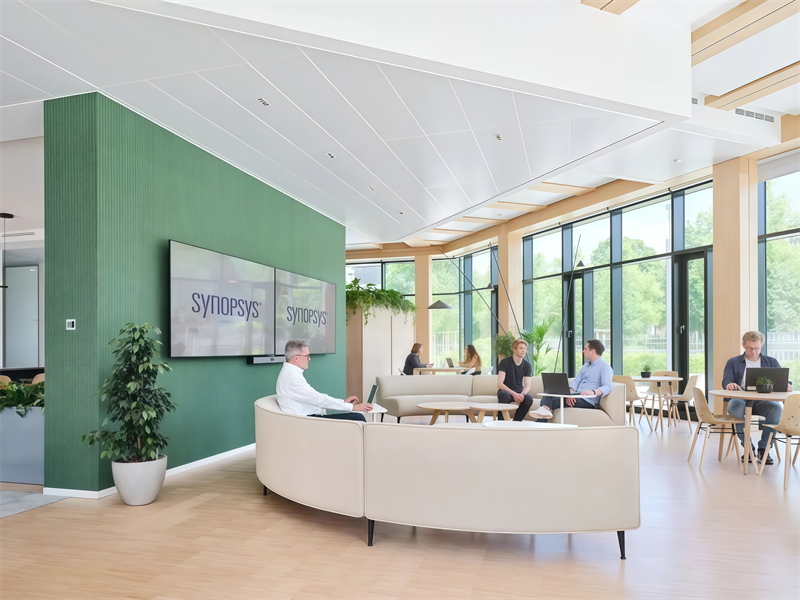
The contemporary workplace is no longer merely a container for work but an active participant in organizational performance and human experience. By thoughtfully balancing openness and privacy through innovative solutions like private office pods, by deeply integrating biophilic principles that connect us to our evolutionary heritage, and by managing the entire process through integrated services, we create environments that simultaneously support focus and collaboration, individual well-being and team cohesion, present needs and future adaptability.
These environments become physical manifestations of organizational values—transparency balanced with discretion, innovation grounded in well-being, individuality within community. They attract and retain talent by demonstrating respect for diverse working styles and commitment to employee health. They enhance productivity by reducing the cognitive load associated with poorly designed environments. Perhaps most importantly, they create the conditions for serendipity and innovation—those valuable moments of unexpected connection and insight that drive organizations forward.
Our comprehensive approach recognizes that excellent workplace design is both an art and a science, requiring equal measures of creativity and rigor, vision and practical execution. The result is not just spaces where work happens, but environments that actively make work better—more engaging, more effective, more human. In an era of hybrid work and increasing competition for talent, such environments provide not just operational advantages but strategic differentiation, helping organizations not only adapt to the future of work but actively shape it.
Copyright © Foshan Cleader Environmental Art Engineering Co., Ltd. All Rights Reserved - Privacy Policy
 EN
EN




 Hot News