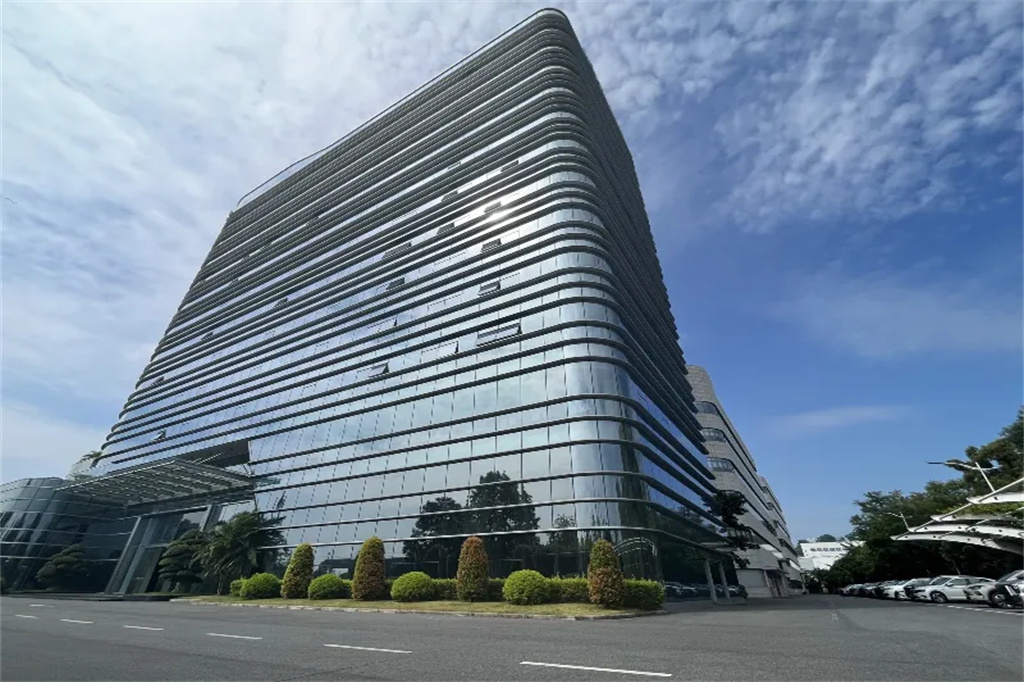
In today’s corporate world, office design is no longer merely about creating functional spaces—it has evolved into an art form that profoundly shapes organizational culture, employee well-being, and overall productivity. The following series of office spaces exemplify the seamless integration of creativity, functionality, and human-centric design. Each space is a carefully curated environment that balances aesthetic appeal with practical needs, fostering innovation, focus, and collaboration. Let’s embark on a deeper visual and analytical journey through these thoughtfully designed spaces, exploring how design elements such as furniture, layout, lighting, materials, and color orchestrate inspiring, efficient, and holistic work environments.
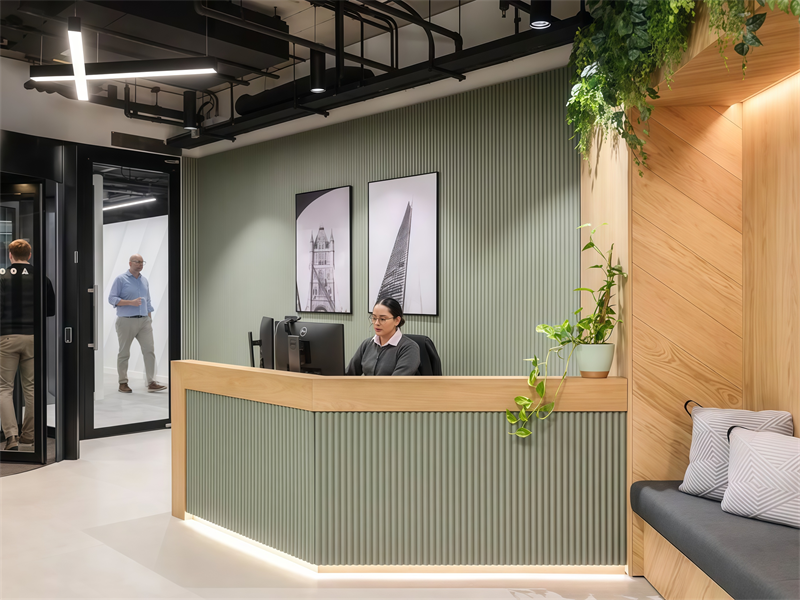
The reception area is the prologue to an organization’s story—a space that forms the first and lasting impression. This design masterfully communicates professionalism, warmth, and contemporary elegance. The minimalist approach is evident in its clean, uninterrupted lines and a restrained material palette featuring natural oak wood paneling, polished concrete floors, and subtle stone accents. The soft, sage-green feature wall is not merely a color choice but a strategic psychological tool, introducing a sense of calm and freshness that immediately alleviates the formal tension often associated with corporate entrances.
Lighting is deployed with surgical precision. A combination of recessed ceiling lights and a sculptural, linear pendant fixture provides ambient illumination, while carefully positioned LED strips highlight the textured wall and the live greenery wall behind the reception desk. This interplay of light and shadow adds depth and visual interest. The inclusion of potted Japanese maple trees and cascading pothos vines in sleek, neutral planters reinforces a biophilic connection, purifying the air while softening the architectural lines. The reception desk itself, a floating structure of light wood and white composite, appears both substantial and weightless, symbolizing stability and innovation. This space is more than a waiting area; it is a tranquil, engaging overture that sets a tone of thoughtful modernity for the entire office experience.
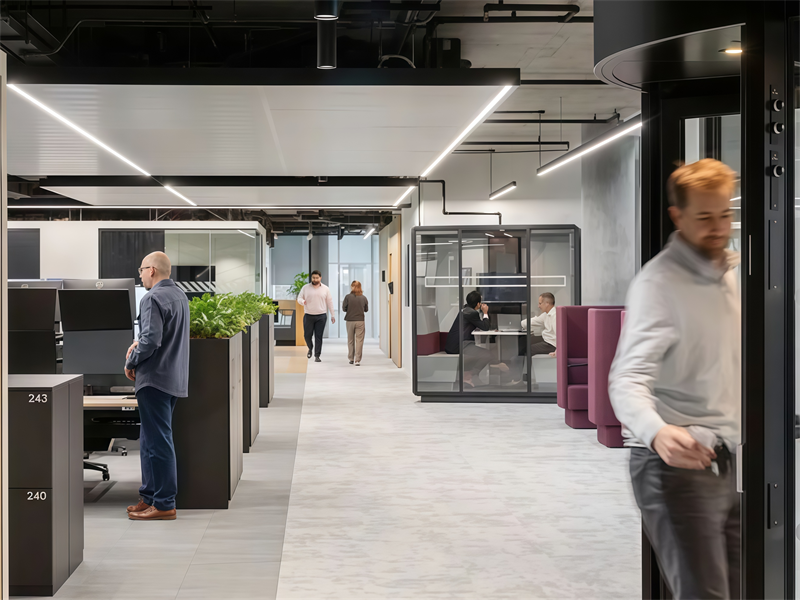
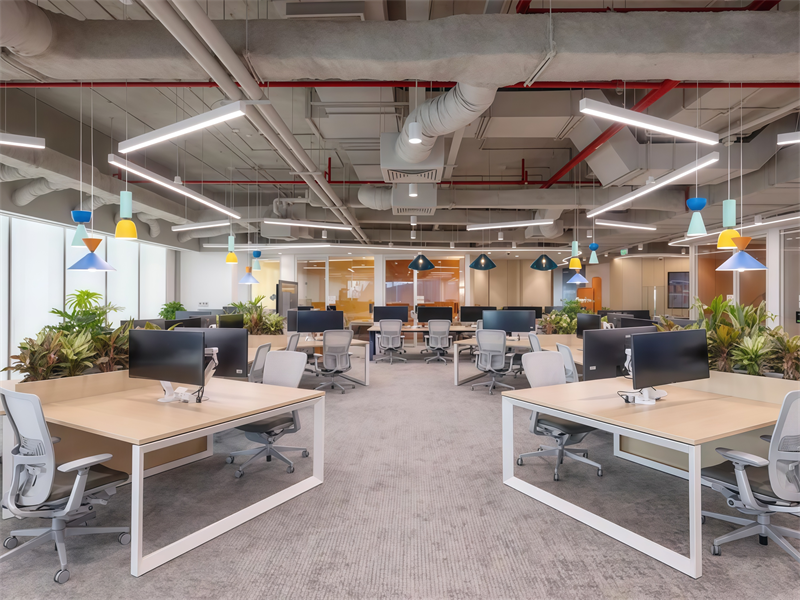
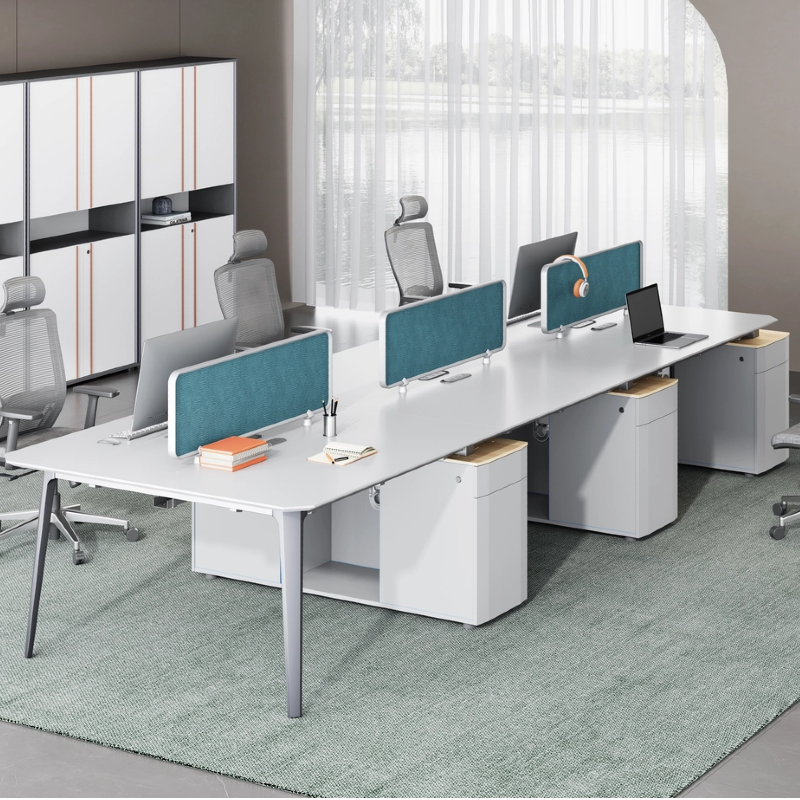
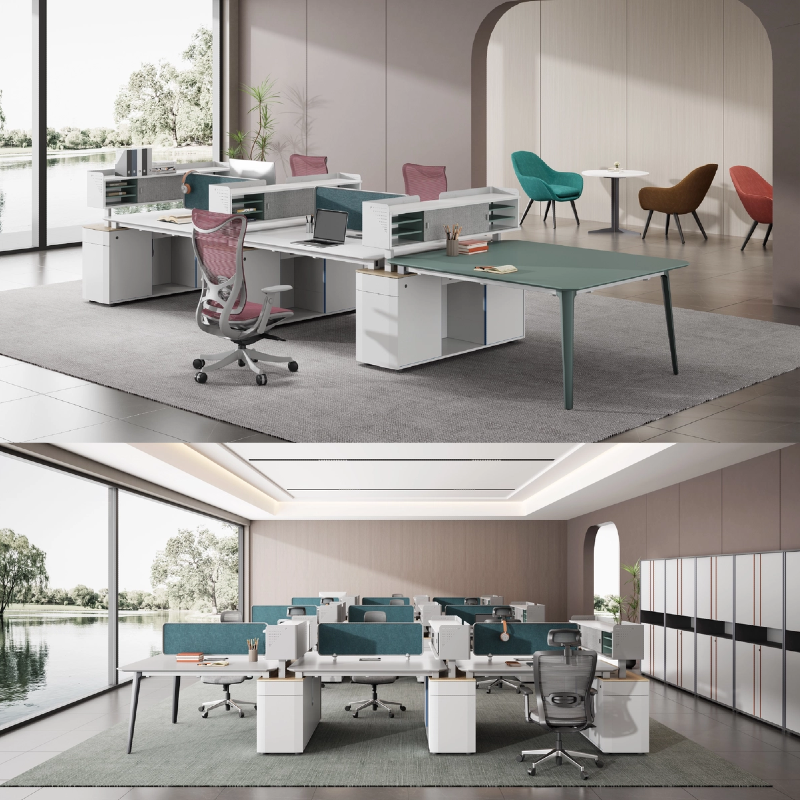
Moving into the heart of the office, the open workspace demonstrates a sophisticated rejection of the noisy, distracting open-plan models of the past. Here, the design philosophy champions "balanced openness." The space is organized into distinct neighborhoods or "clusters," each comprised of modular desks that can be reconfigured for team projects. These clusters are separated not by tall, imposing walls, but by low-profile acoustic screens upholstered in natural wool felt and integrated planters overflowing with peace lilies and ferns.
This clever zoning creates a subtle sense of territory and acoustic privacy without visual isolation. The overarching color scheme is a serene, neutral foundation of warm grays, off-whites, and light wood tones, punctuated by strategic accents of the same calming green found in the reception. This continuity creates a cohesive visual flow. Ergonomic task chairs in muted colors offer support, while under-desk power modules and universal charging docks ensure a clutter-free environment. Large, floor-to-ceiling windows bathe the space in diffused natural light, regulated by semi-sheer solar shades that eliminate glare. The result is an environment that feels both expansive and intimate, energetically collaborative yet respectfully quiet—a space where focus and teamwork coexist harmoniously.
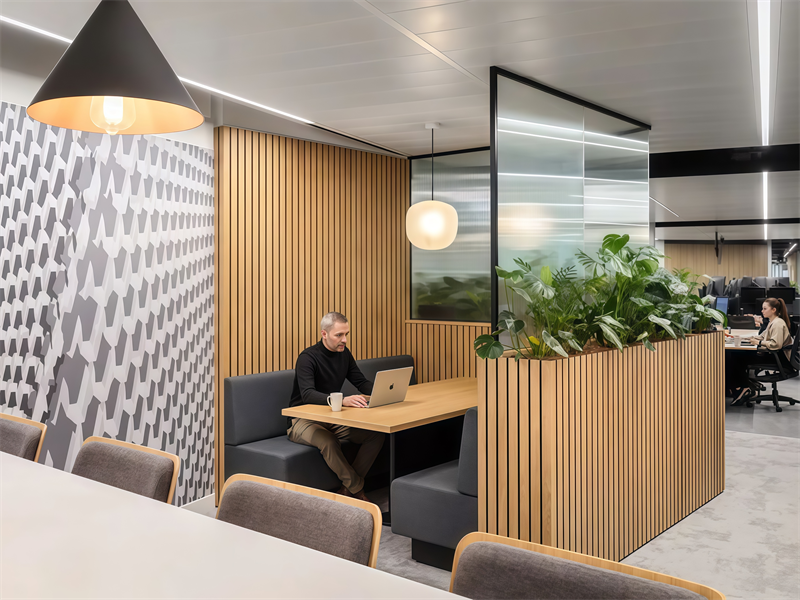
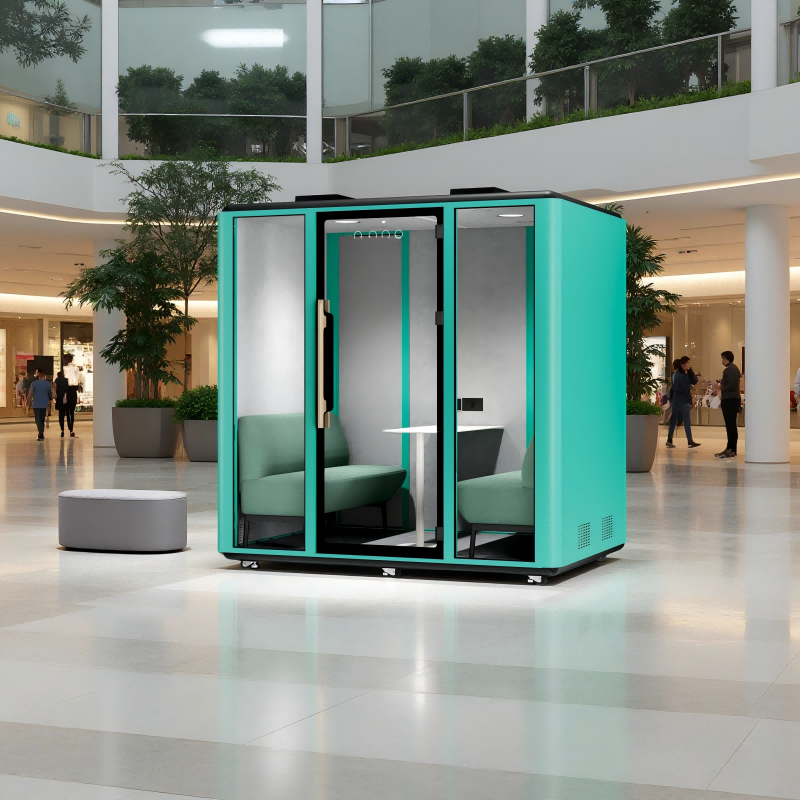
Acknowledging that true collaboration often requires deep, uninterrupted dialogue, the office features a series of state-of-the-art soundproof pods. These are not afterthoughts but integral design elements. Constructed with double-glazed, acoustically laminated glass walls framed in slim, blackened steel, the pods offer visual transparency while providing exceptional sound isolation. This design ensures teams can engage in vigorous brainstorming or confidential conversations without disrupting the open floor plan, embodying the principle of "visible privacy."
Inside, the design is ruthlessly minimalist and purpose-driven. A small, wall-mounted digital screen facilitates presentations, while a central table with integrated wireless charging and connectivity ports serves as the functional core. The seating is a simple yet supremely comfortable upholstered bench that encourages a focused, communal posture. Each pod is crowned with an integrated, circadian-rhythm-aware lighting panel that simulates natural daylight, reducing eye strain. A single, carefully selected architectural plant, like a Zamioculcas, adds a necessary touch of life and softness. These pods are celebrated not as isolation chambers, but as premium tools for achieving flow state and meaningful collaboration.
Strategically interspersed throughout the office are breakout and lounge areas, engineered as essential pressure-release valves. These spaces operate on the principle of "passive restoration." Gone are the stiff sofas of corporate lobbies; in their place are deeply cushioned, residential-style sectionals in durable, tactile fabrics like bouclé and performance velvet. The seating arrangements are intentionally varied, offering options for solitude, pair conversation, or small-group interaction.
The lighting scheme shifts dramatically here: warm, dimmable pendant lights and integrated shelf lighting replace the cool, task-oriented lights of the work areas. The inclusion of elements like a library nook with curated books, a quiet corner with a meditation app headset station, and a high-top counter with a complimentary specialty coffee bar transforms these zones into multi-functional retreats. Large, vertical green walls act as living art, improving humidity and air quality. These areas are not frivolous perks but critical infrastructure for mental recovery, sparking the informal, serendipitous interactions that often lead to breakthrough ideas.
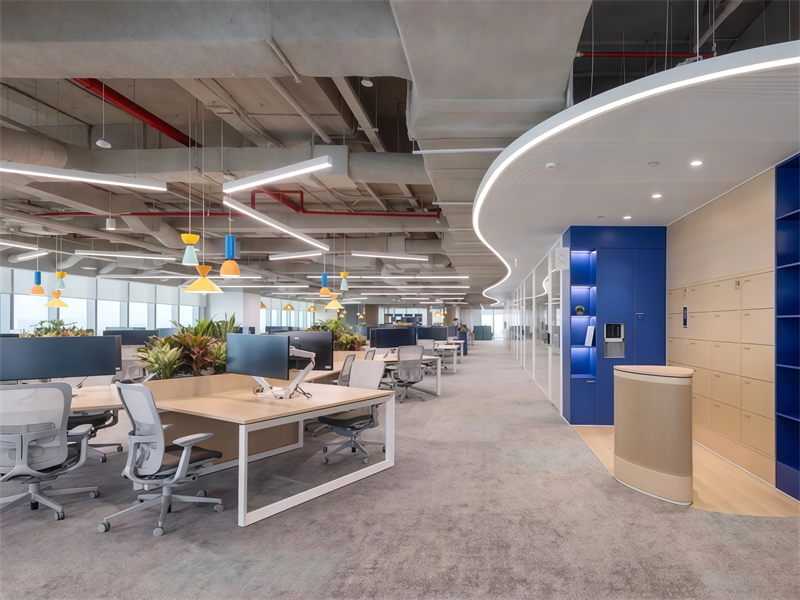
In a masterstroke of contrast, the design incorporates bold, dynamic elements that prevent the serene palette from becoming sterile. Most strikingly, a series of large, colorful pendant lights—in hues of terracotta, deep ocean blue, and mustard yellow—are suspended above the central collaboration hub. These are not random decorations; they function as visual waypoints, drawing employees toward spaces designed for energetic exchange.
This strategic use of color is psychologically calculated. The vibrant accents stimulate creativity and associative thinking, making this zone feel distinctively energetic. This philosophy extends to the phone booth enclosures, which are clad in a different, bold color internally, creating a surprising and uplifting moment for the user. The open plan remains fluid, with lightweight, mobile whiteboards and furnishing on casters allowing teams to reshape their environment spontaneously. This approach ensures the office is not a static tableau but an evolving, responsive landscape that mirrors the dynamism of the work within.
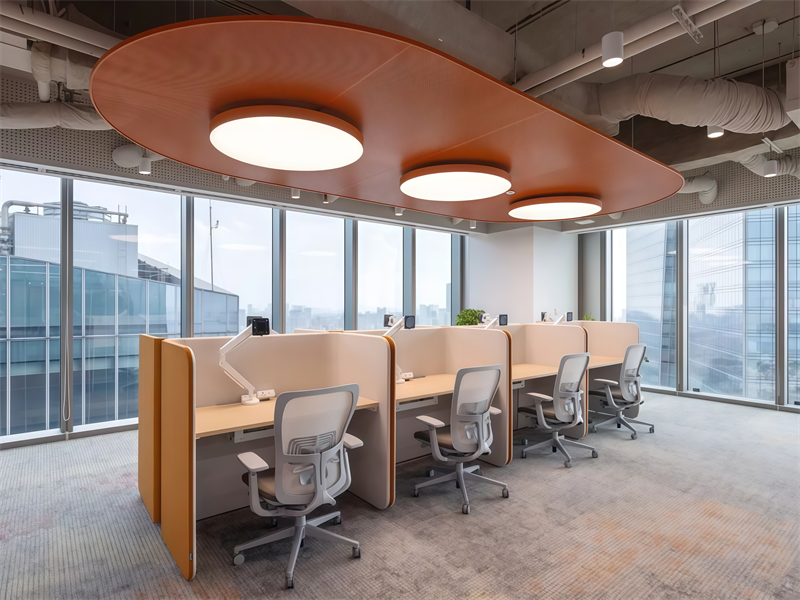
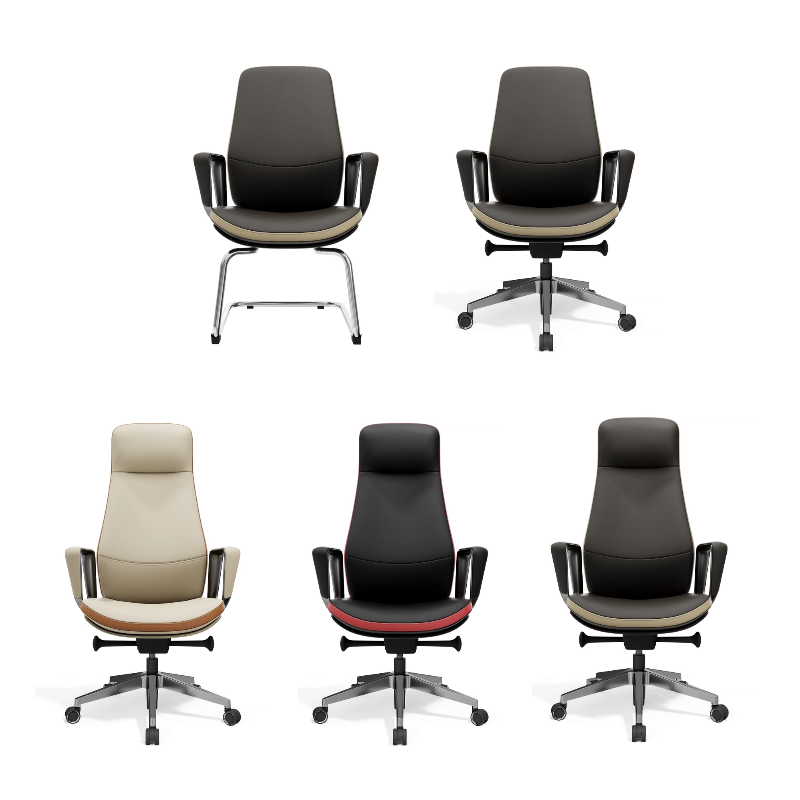
Beneath the aesthetic surface lies a rigorous commitment to ergonomic science, understanding that physical comfort is the foundation of sustained productivity. Every workstation features electrically height-adjustable desks with programmable memory settings, empowering employees to alternate between sitting and standing throughout the day. The chairs are not just "ergonomic" in name but are fully adjustable models supporting dynamic sitting, with synchronized tilt mechanisms and lumbar support that adapts to the user.
In focus rooms and dedicated workstations, monitor arms allow for perfect screen positioning, and keyboards are of a split, tented design to promote neutral wrist posture. Even the flooring has been considered, with cushioned vinyl tiles providing underfoot relief. Warm wood veneers on desks and soft, indirect lighting from integrated desk lamps reduce visual fatigue. This holistic ergonomic strategy demonstrates a profound investment in employee health, translating directly into reduced absenteeism and heightened long-term engagement.
The modern workplace is a digital organism, and here, technology is seamlessly woven into the fabric of the design, acting as an invisible, empowering nervous system. Cable management is entirely concealed within furniture legs and architectural raceways, maintaining clean sight lines. The office operates on a unified IoT platform, where employees can use a single app to book meeting rooms, adjust the lighting and temperature at their desk cluster, or find colleagues via real-time location beacons.
Collaborative spaces are equipped with large-format touch-screen displays that allow for wireless screen sharing from any device, facilitating seamless hybrid meetings. Even the lounge areas are served by discreet, high-speed wireless charging pads integrated into tabletops. This deep, intuitive tech integration removes friction from daily tasks, allowing employees to focus on high-value work rather than battling with their environment. It creates a workplace that is not just smart, but intelligently responsive to human needs.
These office spaces collectively represent the zenith of contemporary workplace design, moving far beyond trend to establish a new standard. They are built on the understanding that the environment is a silent yet powerful collaborator. The careful synthesis of biophilic elements, human-centric ergonomics, adaptive layouts, and invisible technology creates a holistic ecosystem that supports the full spectrum of human endeavor—from deep, individual focus to lively, collaborative creation.
This design approach is a testament to a fundamental truth: when an organization invests thoughtfully in the spaces where its people work, it is investing directly in their well-being, creativity, and performance. These environments are more than just places to work; they are platforms for potential, designed to attract talent, nurture innovation, and adapt gracefully to the future of work. They reflect a future-forward vision where the workplace is inherently adaptable, genuinely inclusive, and perpetually inspiring—a true habitat for success.
Copyright © Foshan Cleader Environmental Art Engineering Co., Ltd. All Rights Reserved - Privacy Policy
 EN
EN



 Hot News