The moment the heavy glass door of a soundproof pod clicks shut, the world goes quiet. For a split second, it feels like magic. But for many users, that magic quickly fades into discomfort as the temperature rises and the air begins to feel heavy. The most frequent complaint in the acoustic furniture industry is the “Sauna Effect”—the rapid buildup of heat and carbon dioxide in a confined, sealed space.
At Cleader, we believe that a pod that provides silence but sacrifices comfort is a failure of engineering. Silence should not come at the cost of oxygen. That is why we spent years optimizing our airflow ecosystem through Computational Fluid Dynamics (CFD), ensuring that every Cleader pod functions as a high-performance environment, not just an isolated box.
The fundamental challenge of pod design is a physical paradox. Soundproofing requires a total airtight seal to block external waves. Ventilation, however, requires holes to move air. If you simply cut holes in a pod, the noise pours in. If you seal it tight, the user suffocates.
Cleader solves this through our proprietary "Labyrinthine Air Path" design. Our intake and exhaust channels are engineered as acoustic baffles—essentially a maze of sound-absorbing materials that allow air molecules to flow through while forcing sound waves to bounce, dissipate, and eventually die out. This ensures that even with a high-volume refresh rate, the pod maintains its STC (Sound Transmission Class) rating of 30-35dB.

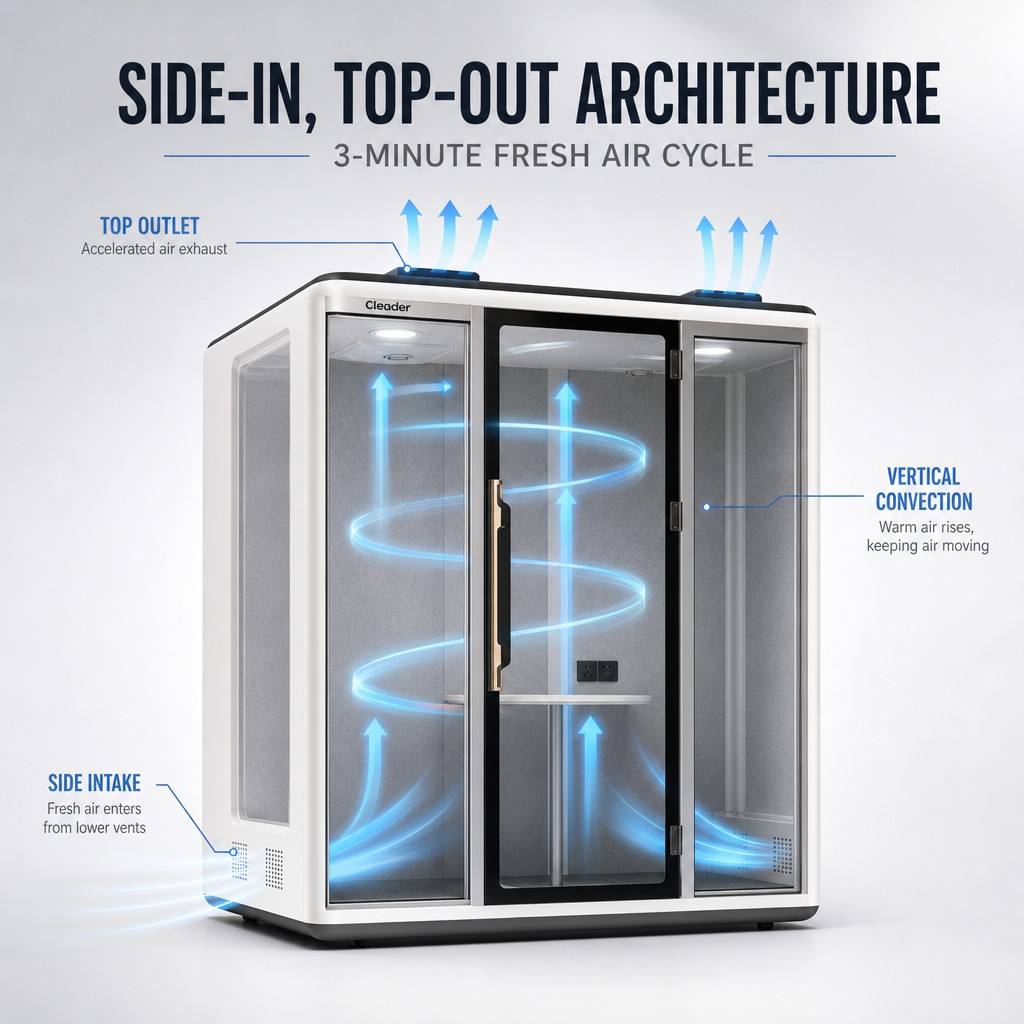
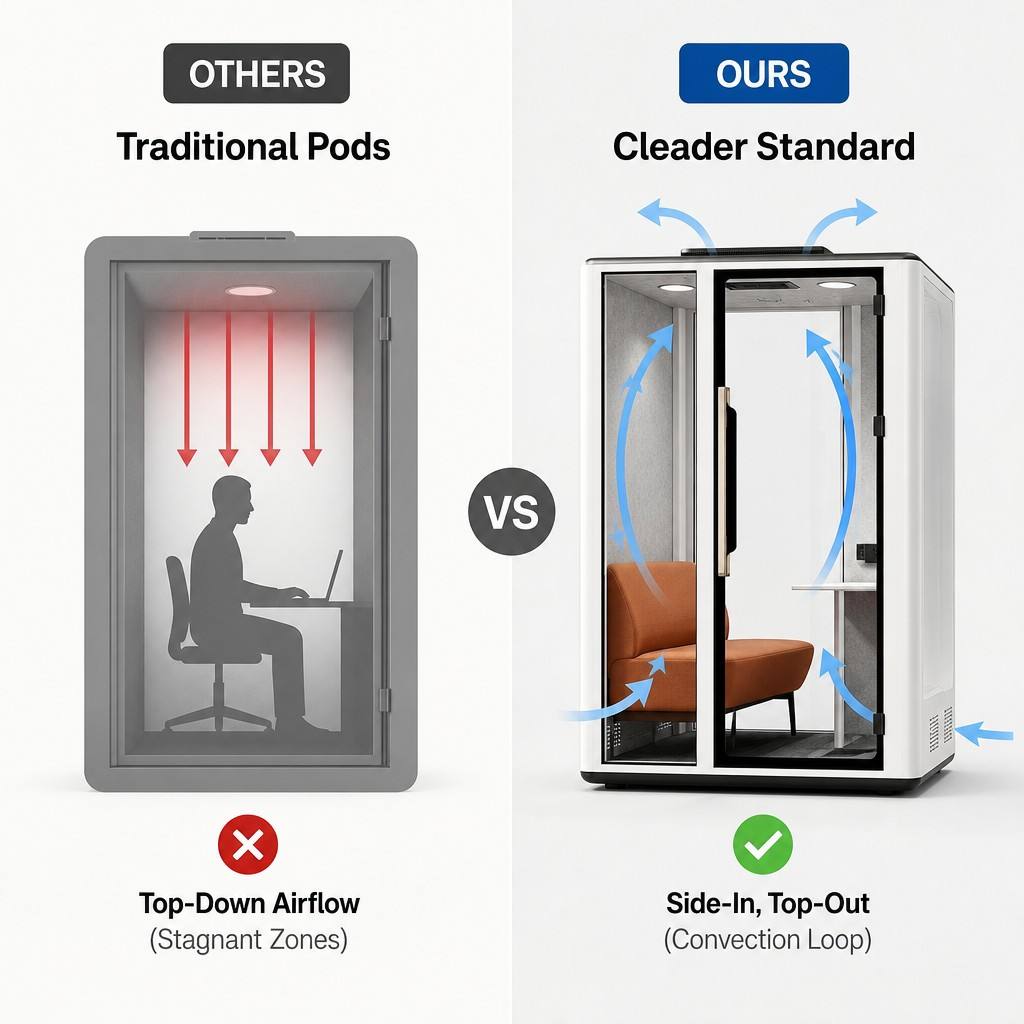
Heat management in a small space is difficult because the human body acts as a 100-watt heater. In a standard 1-square-meter pod, the temperature can rise by 3-5°C in just 15 minutes without proper circulation. Most budget manufacturers use a "Top-Down" fan system that simply pushes warm air from the ceiling back onto the user's head.
Cleader utilizes a "Side-In, Top-Out" vertical convection loop. We strategically place intake vents at the lowest point of the chassis, drawing in cooler, oxygen-rich air from the floor level. Because cool air is denser, it pushes the warmer, carbon-heavy air upward. Our powerful exhaust system at the top then accelerates this rising air out of the pod. This creates a natural breeze effect that refreshes the entire internal volume every 60 to 90 seconds, preventing "thermal lag" and ensuring the user stays cool during high-stakes calls.
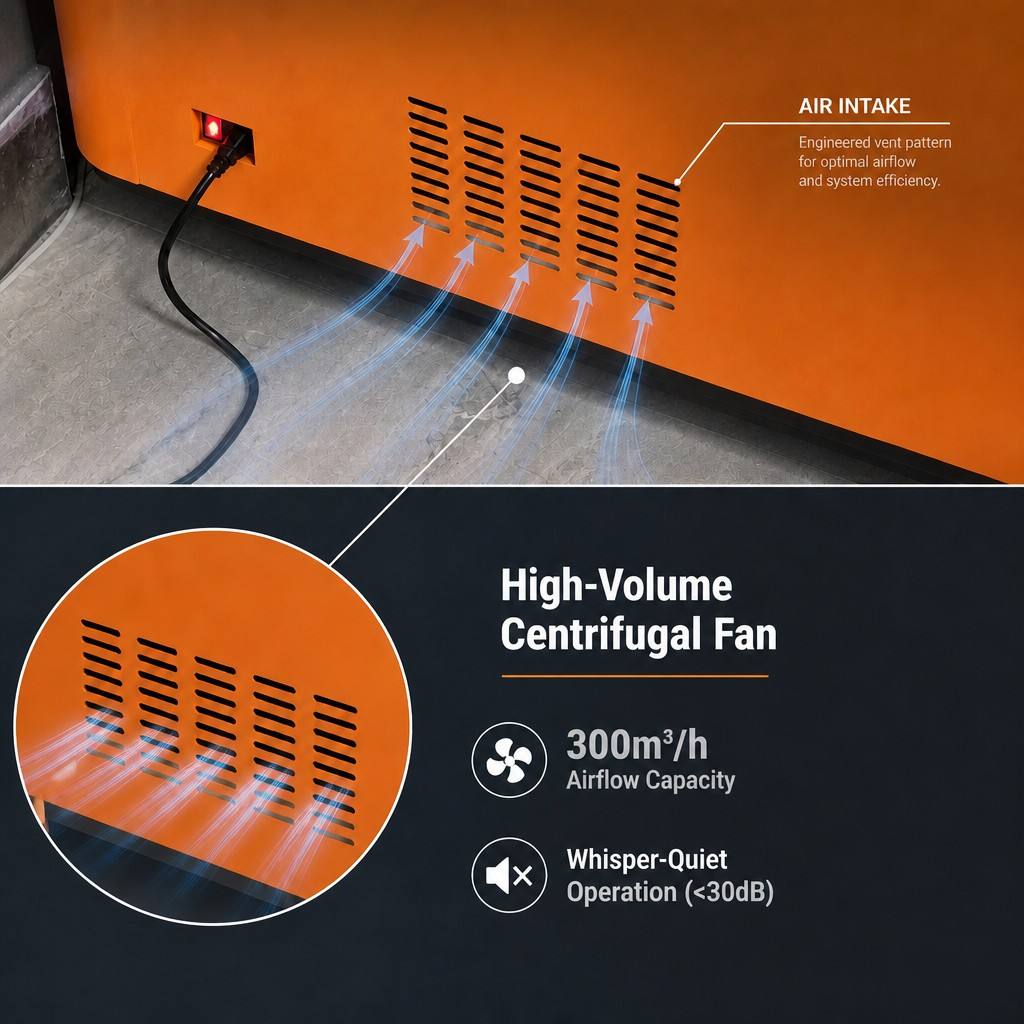
The "heart" of our ventilation system is the custom-designed Centrifugal Fan. Traditional axial fans (like the ones in a PC) create a high-pitched whine as they struggle to move air against the resistance of acoustic filters. This noise is often picked up by sensitive laptop microphones during Zoom calls.
Our centrifugal system is built for high static pressure. It moves up to 300 cubic meters of air per hour (300m³/h) at a significantly lower RPM. By moving more air with less effort, we eliminate the "jet engine" background noise. The result is a ventilation system that is virtually indistinguishable from the background hum of a quiet office, ensuring crystal-clear audio for your remote participants.
Air quality isn't just about comfort; it is about performance. Research shows that when CO2 levels exceed 1,000ppm (parts per million), cognitive ability drops by 15%, and drowsiness sets in. Most standard meeting rooms hit this threshold within 30 minutes.
Cleader pods are engineered to maintain CO2 concentrations below 800ppm, even during extended use. By maintaining a constant flow of fresh air, we protect your team’s "Cognitive Budget." When you step into a Cleader pod, you aren't just escaping the noise; you are entering a space optimized for deep focus and sharp decision-making.
In the era of hybrid work, the office is no longer just a place for desks; it is a tool for productivity. If your pods are too stuffy to use for more than ten minutes, they are a wasted investment. By mastering the science of airflow, Cleader ensures that your quiet zones remain active, used, and high-performing assets for years to come.
Copyright © Foshan Cleader Environmental Art Engineering Co., Ltd. All Rights Reserved - Privacy Policy
 EN
EN



 Hot News